Speak your Point
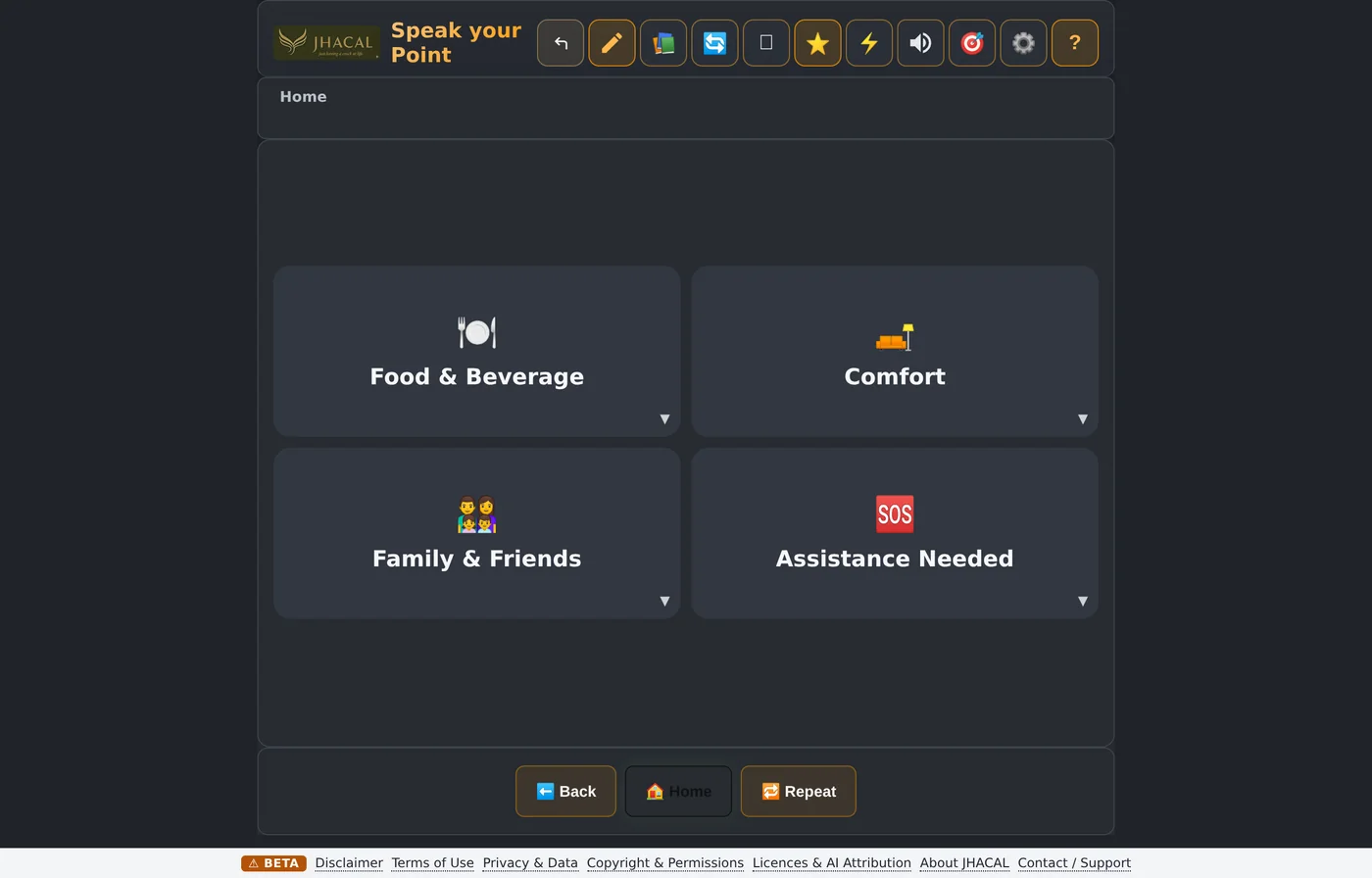
Point at pictures to build what you want to say. The topics follow the shape of a real day, from a morning cup of tea to asking for help, so the right tile is a glance away rather than a hunt.
Augmentative and alternative communication
When your own voice falters, these tools carry it for you. Nine of them, each built for one real person rather than an average one, ready to keep pace as speech, energy and movement change. Everything you say stays on your device, yours alone.
Where it came from
One man built the first tool for someone in his own family who was losing the ability to speak. A degenerative illness was taking the words faster than anything on the market could keep up with, and what he could find was too clinical, too slow, or simply out of reach.
So he wrote his own. Then another, and another, each one shaped around what that person actually needed that day. Fewer taps. Bigger targets. The few phrases that mattered kept close at hand. It was never about covering every case. It was about letting one person keep saying the things they wanted to say, for as long as they could.
Building for a real person, never an average one, still shapes every decision we make.
Nine ways to be heard
Some people settle into a single tool. Most move between a few. They share one voice, one vocabulary and one set of settings, so moving from one to another never feels like starting over.
Point at pictures to build what you want to say. The topics follow the shape of a real day, from a morning cup of tea to asking for help, so the right tile is a glance away rather than a hunt.
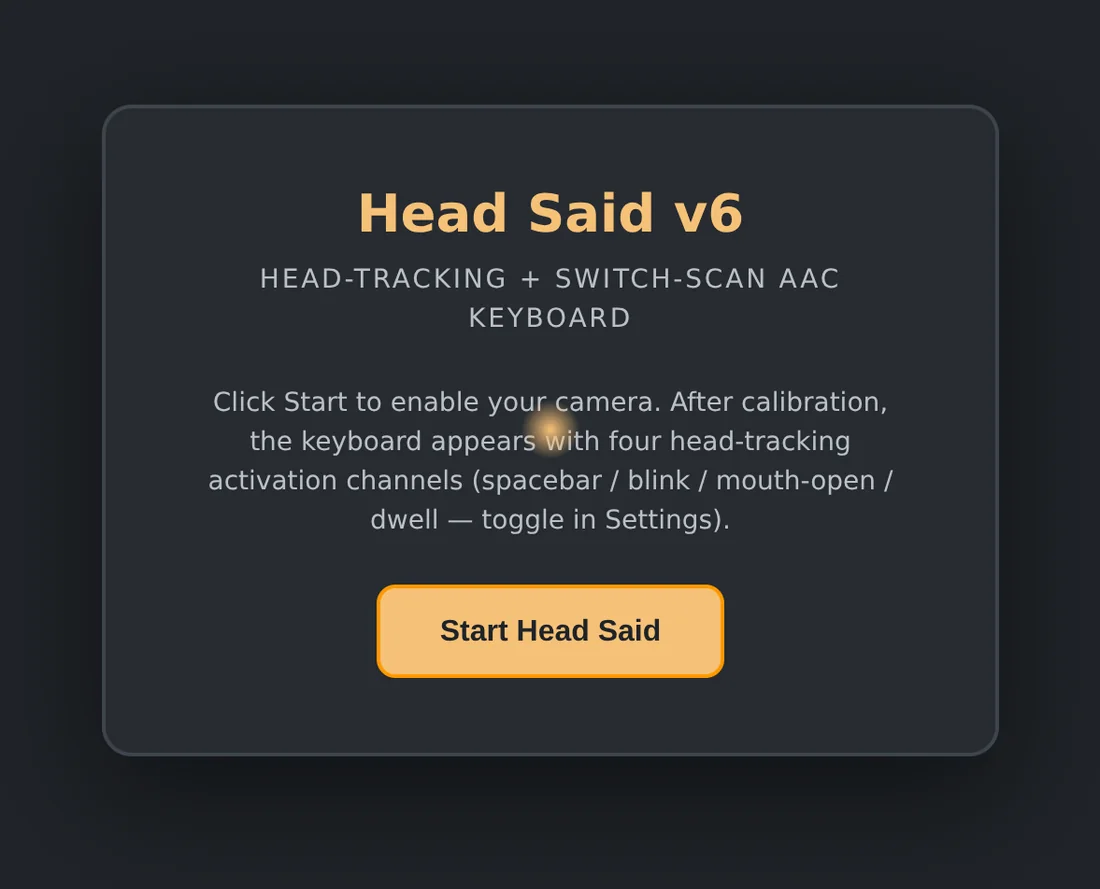
No hands required. A look, a blink, or a single switch moves through the keyboard and makes the choice for you. When movement shrinks to almost nothing, this is the tool that keeps a voice within reach.
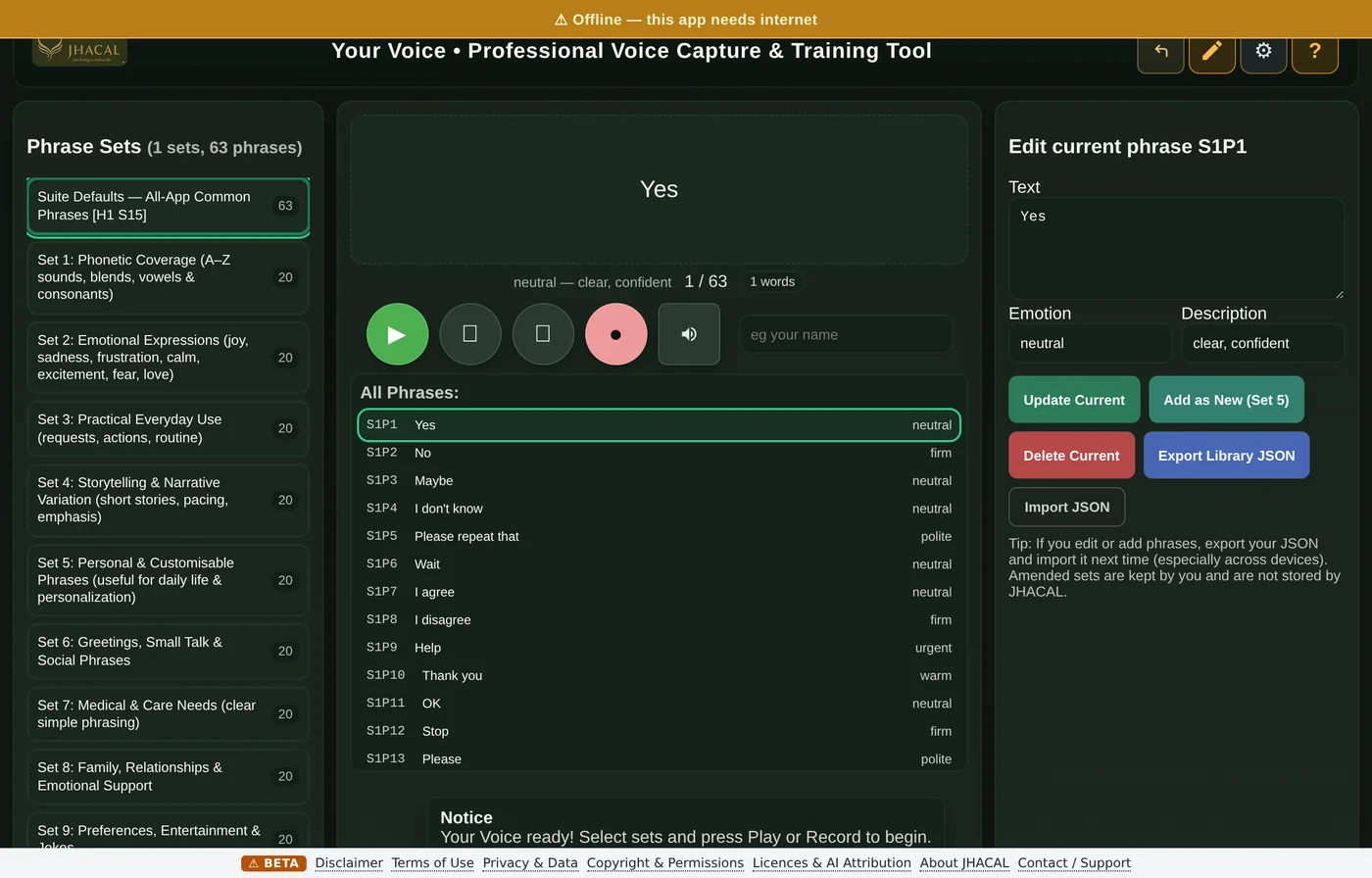
Record yourself while you still can, and keep that sound. Later, the words you type can be spoken in your own voice, the one your family knows, rather than a stranger's. The recordings never leave your device.
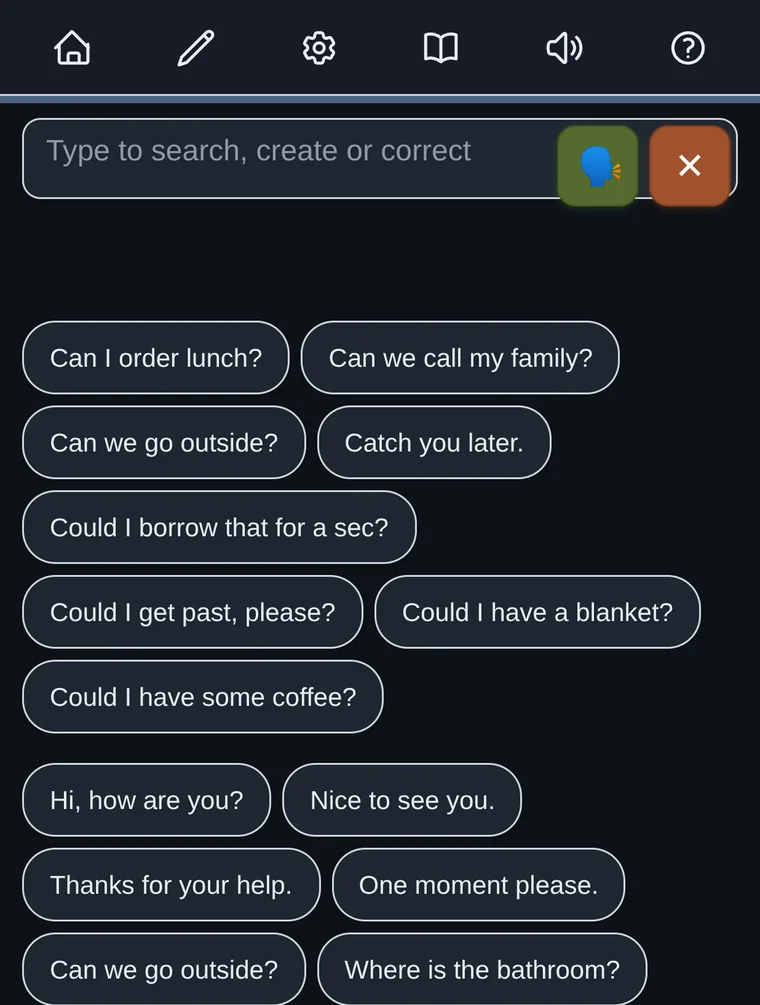
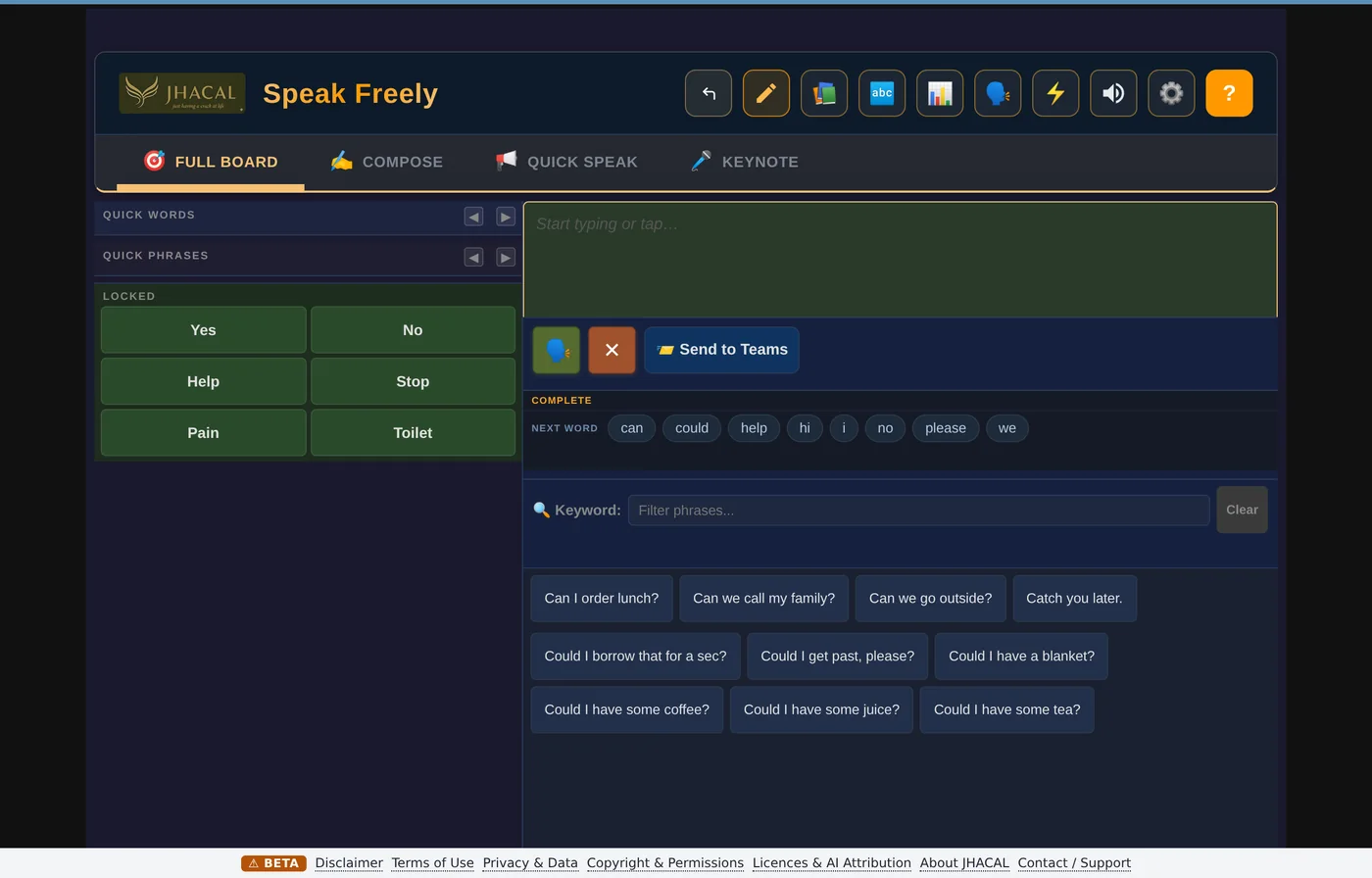
The full talker, sized for the phone in your pocket. One thumb, a quick search, and the sentence is ready before the moment passes.
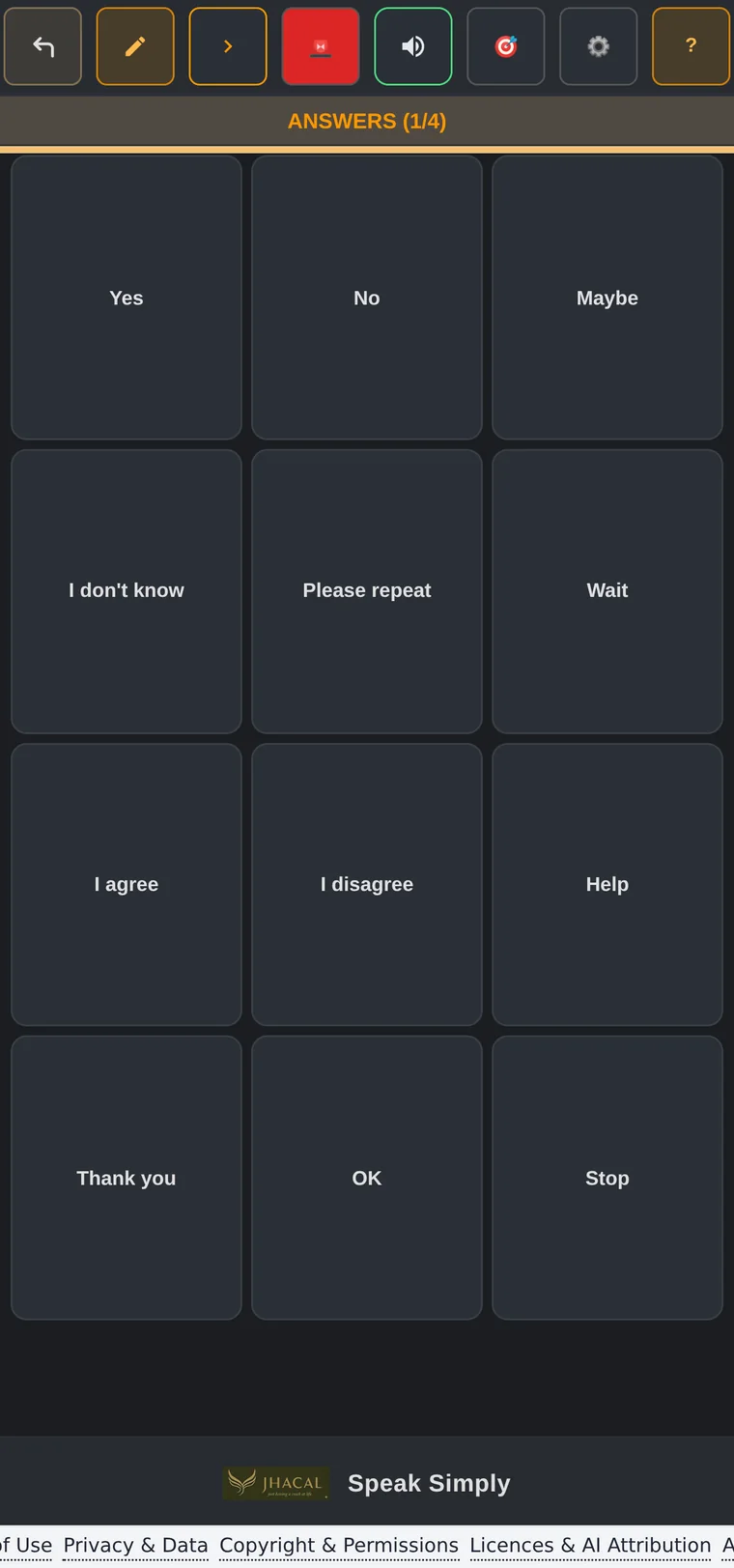
A calm grid of the words people reach for most. Yes, no, maybe, wait, thank you, each one a single tap away.
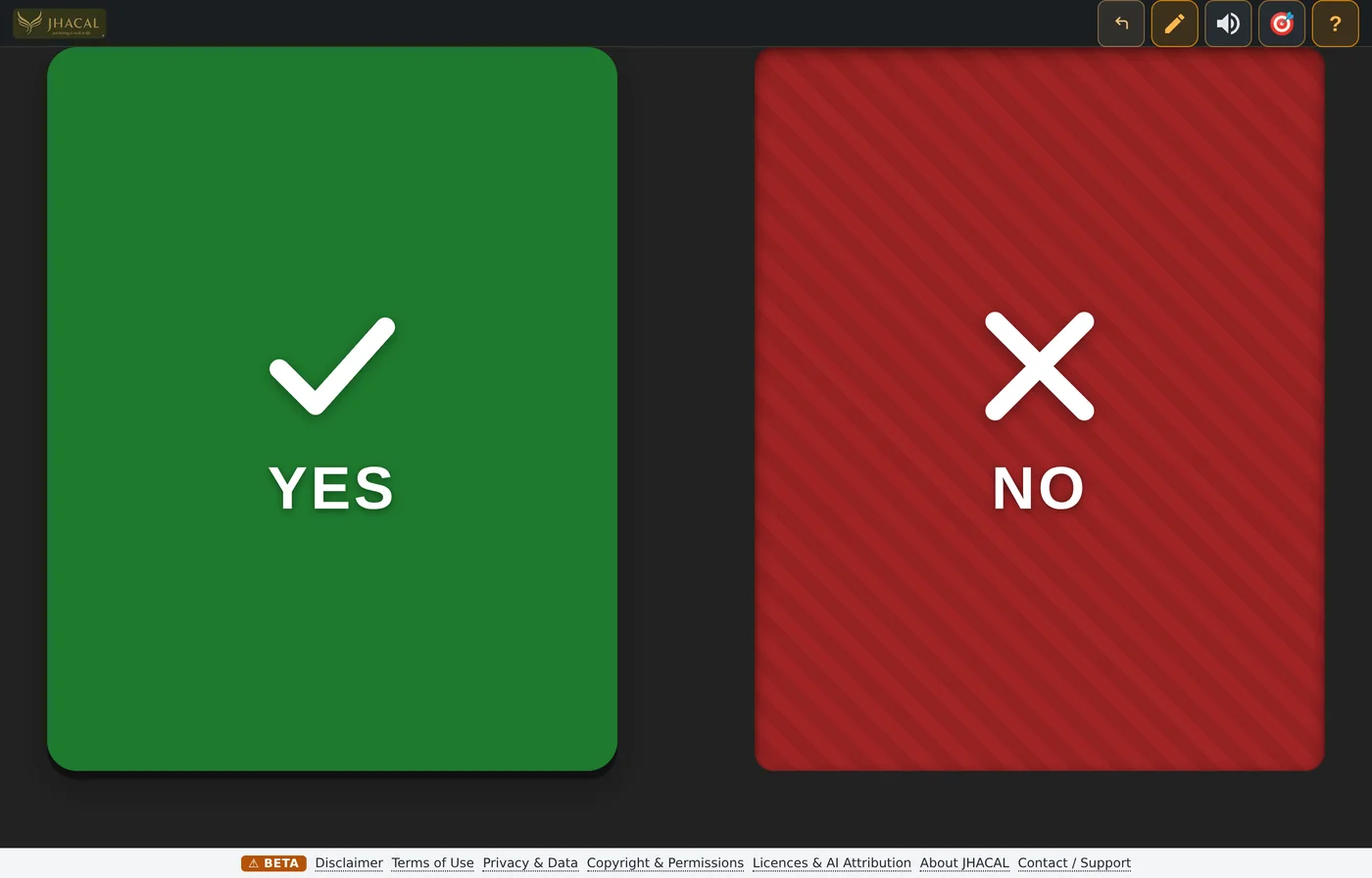
When energy runs low, this is enough. A green yes, a red no, spoken aloud the instant you choose.
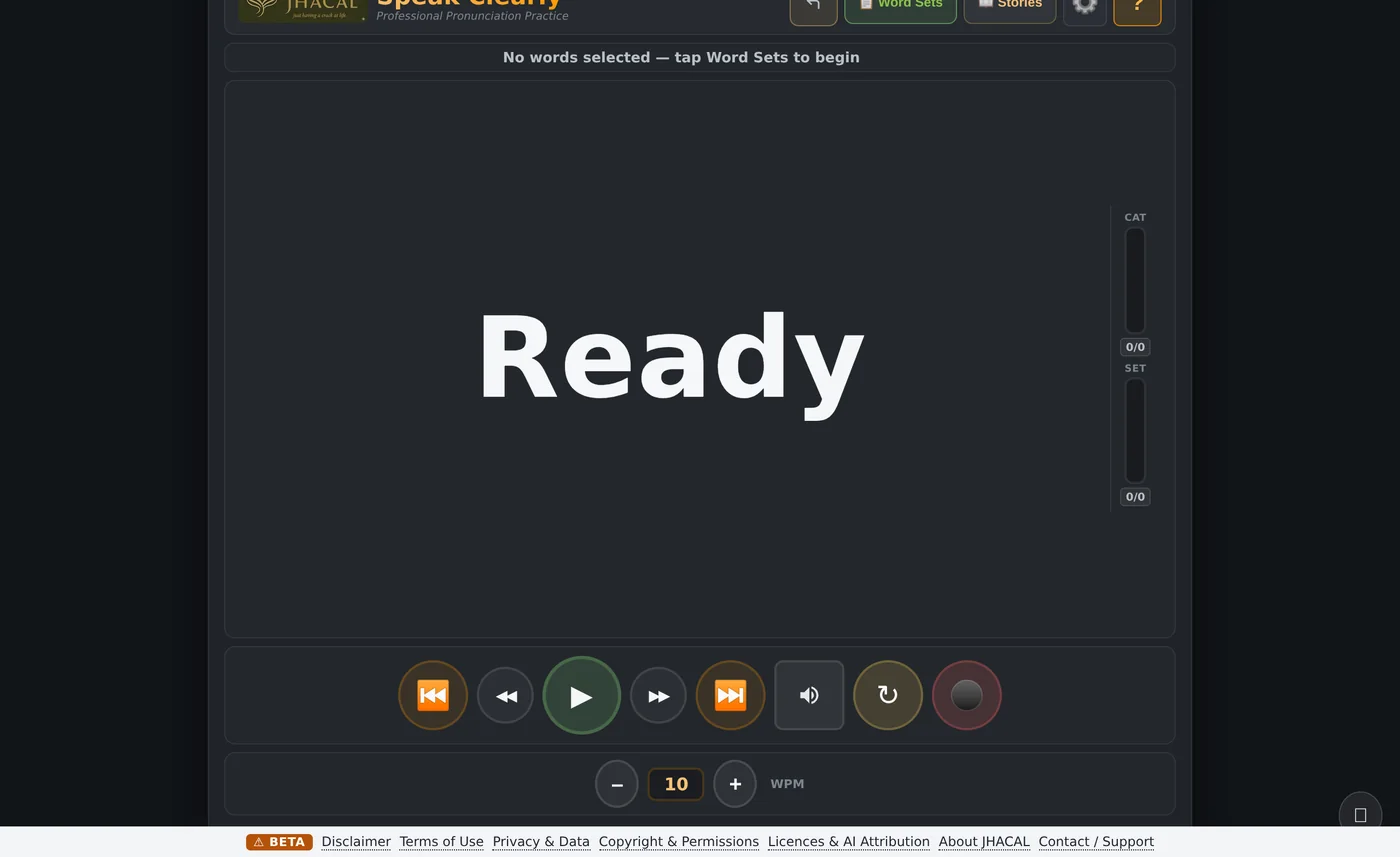
Practise sounds and words at your own pace, with a voice to follow and a record button to hear yourself back.
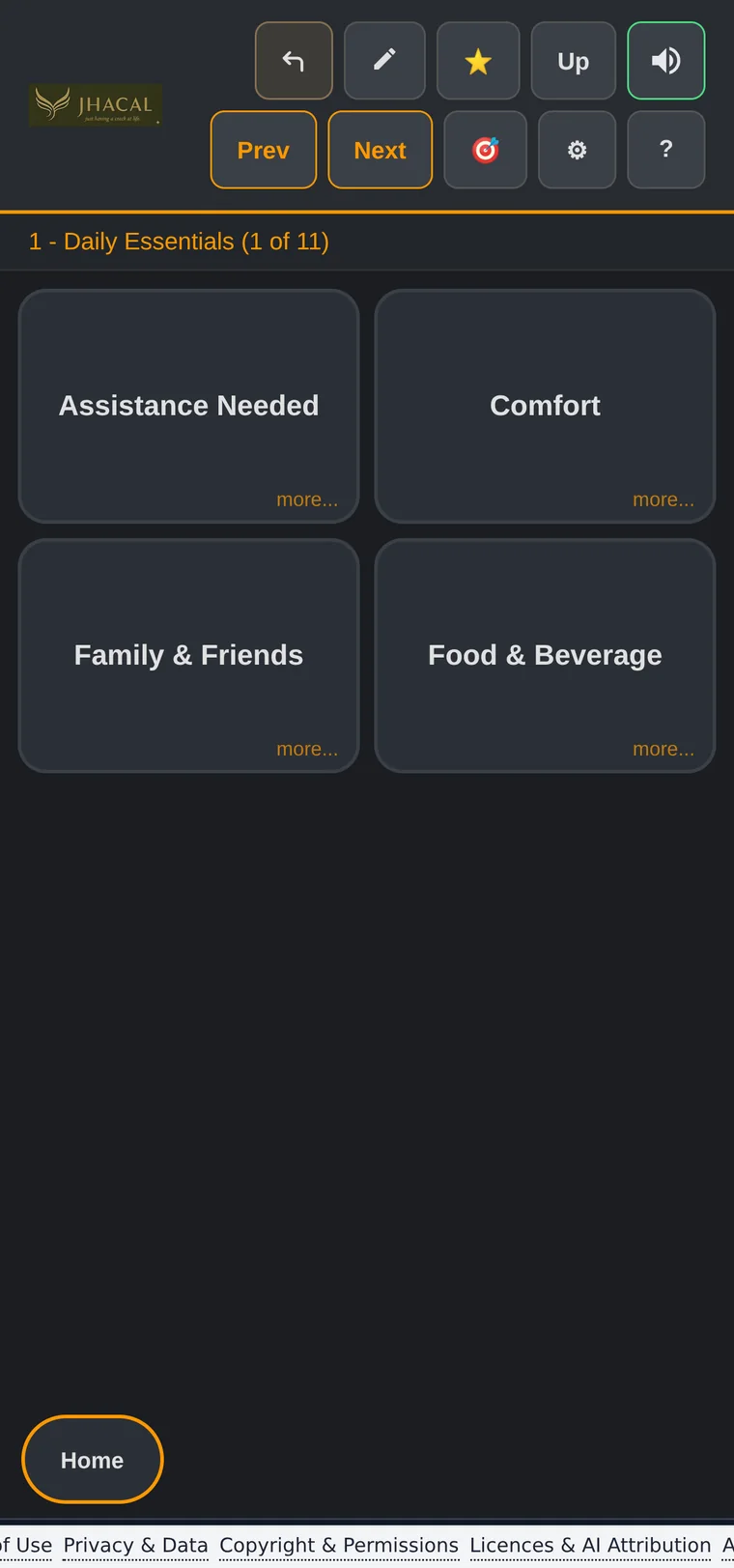
The same picture talker, trimmed down for a smaller screen and a lighter touch.
Who it is for
Speak Easy is for people living with MND or ALS, PSP, the after-effects of a stroke, cerebral palsy, autism, or a voice lost for just a week or two. Some lean on it for years. Some only need it until their own voice returns.
It is just as much for the people alongside them. The partner learning the board. The carer who sets it up before a shift. The therapist matching the right tool to a hard Tuesday. It is made to pass from hand to hand without anyone reaching for a manual.
As things change
Some weeks a full keyboard suits you fine. Other weeks a single yes or no is the whole conversation, and that has to be enough.
Choose the tool that fits today. A full talker, a picture board, or two large cards. No long setup to wade through first.
Shift to bigger targets, fewer choices, or hands-free control whenever you need them. The tools are built to meet you there.
Your words, your settings and your recorded voice follow you across every tool, and they stay on your device. Nothing is uploaded, so changing how you talk never means starting over.
Communication is a right,
not a privilege.
Speak Easy Suite is licensed software, shared with care rather than sold to the masses. There is no data capture, no tracking, and nothing about you is ever sold. If you live with a communication disability, care for someone who does, or work in speech therapy, send us a short note and we will help you find the right setup, including any hardware you need.
Request access Licensing for organisations
We read every message ourselves. Expect a real reply from a real person, not an autoresponder.